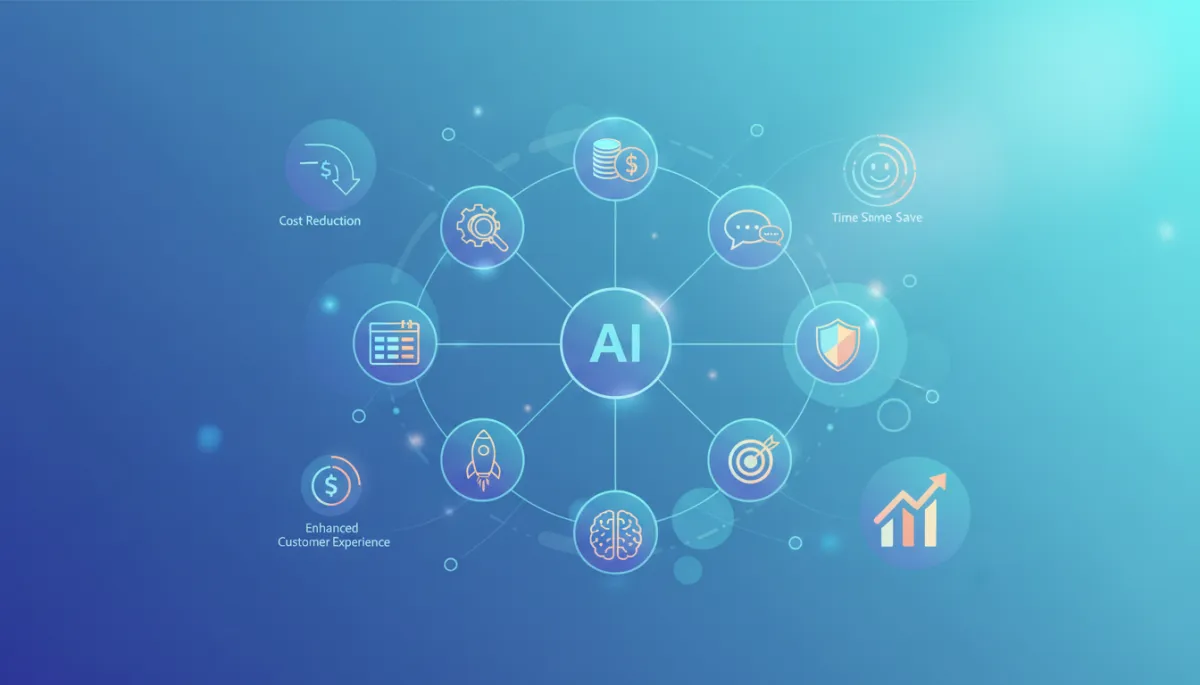
Top 10 AI Tools for Small Businesses in 2026
Small Business, Artificial Intelligence, Productivity Tools
10 AI Tools Every Small Business Should Use in 2026
In 2026, artificial intelligence is no longer a “nice to have” for small businesses—it is the quiet engine behind faster decisions, lower costs, and better customer experiences. The challenge is not whether to use AI, but which tools will genuinely boost productivity and deliver measurable results instead of adding complexity.
How AI Is Transforming Small Business Operations in 2026
Across industries, AI is quietly reshaping day‑to‑day operations. Routine work that once ate hours—answering basic customer questions, drafting emails, summarizing meetings, updating CRM records, or planning campaigns—can now be automated or heavily assisted by intelligent tools. Research from Forbes and Business News Daily shows that by 2026, AI is a core driver of small business productivity, helping owners automate processes, make data‑driven decisions, and improve customer experiences without hiring large teams.
The following ten tools focus on what matters most to small businesses: saving time, reducing costs, improving customer experiences, and scaling efficiently while keeping overhead under control.
1–2. All‑Purpose AI Assistants to Save Time Everywhere
1. ChatGPT (Plus or Team)
ChatGPT remains one of the most versatile AI tools for small businesses in 2026. Teams use it to draft emails, write blog posts, create product descriptions, brainstorm offers, summarize long documents, and even generate simple code or spreadsheet formulas. The Plus and Team plans unlock stronger models, file uploads, and collaboration features—helping you automate repetitive writing tasks and reclaim hours each week with minimal cost compared to hiring extra staff.
2. Claude for Small Business
Claude excels at handling long documents and nuanced analysis. The Claude for Small Business offering adds plug‑and‑play connectors for tools like QuickBooks, PayPal, HubSpot, Canva, DocuSign, Google Workspace, and Microsoft 365. That means you can ask questions like, “What were my most profitable customers last quarter?” and get clear answers pulled from multiple systems—helping enhance decision‑making without paying for a full‑time analyst.
3–5. Marketing & Design AI to Improve Customer Experiences
3. Jasper
Jasper focuses on marketing content: landing pages, ad copy, email sequences, and social posts. Its brand voice templates help you maintain a consistent tone across every channel, which is essential for delivering a reliable customer experience. Instead of spending days writing campaigns, small teams can generate, test, and refine content in hours—saving time and letting you respond quickly to market changes.
4. Writesonic + Surfer for SEO Content
The Writesonic and Surfer combination is powerful for search‑driven growth. Writesonic drafts articles and product pages, while Surfer analyzes top‑ranking pages and suggests how to optimize your content. Together, they help small businesses scale content production efficiently, attract organic traffic, and reduce reliance on expensive paid ads—directly contributing to cost reduction and long‑term growth.
5. Canva Magic Studio
Canva’s Magic Studio uses AI to generate on‑brand graphics, resize designs for different platforms, clean up images, and even build presentations from a brief. For small businesses without in‑house designers, this is a practical way to improve the visual side of customer experience while keeping design costs low. A modest monthly fee replaces dozens of hours spent trying to design from scratch or paying per‑project agency rates.

A focused AI stack lets small teams do more work with fewer resources.
6–7. Automation & Customer Support to Reduce Costs
6. Zapier with AI Connect
Zapier has long been a favorite for no‑code automation. With AI Connect, it becomes even smarter: you can describe a workflow in plain language—“When a new lead fills out my website form, add them to the CRM, send a welcome email, and notify sales”—and Zapier suggests or builds the automation. This automates repetitive tasks across apps, saves time, and avoids the need to hire developers or extra admin staff, directly reducing operational costs.
7. Tidio for AI Chatbots
Tidio offers AI‑driven chatbots that answer common customer questions, track orders, and qualify leads in real time. Customers get instant responses 24/7, which significantly improves customer experience, while your team only steps in for complex issues. This combination of better service and lower support load is one of the clearest examples of AI helping small businesses scale efficiently without significantly increasing overhead.
8–9. AI‑Powered CRM and Sales to Enhance Decision‑Making
8. HubSpot CRM with AI Features
HubSpot’s CRM remains a strong choice for small businesses, with AI now woven throughout. Predictive lead scoring highlights which contacts are most likely to convert, while AI‑assisted email writing and analytics suggest the best messaging and timing. Instead of guessing where to focus, your sales and marketing teams can make decisions based on real data, improving win rates and supporting business growth without dramatically increasing sales headcount.
9. Freshsales with Freddy AI
Freshsales is an affordable CRM that uses its Freddy AI assistant to analyze customer intent, flag at‑risk deals, and suggest next best actions. Features like AI‑powered business card scanning and enhanced lead capture help you keep your pipeline updated with minimal manual effort. This kind of AI‑driven insight means your team can prioritize the right conversations, close more deals, and grow revenue per employee.
10. Notion AI for Operations & Internal Knowledge
Notion AI turns your notes, SOPs, and project plans into a searchable, intelligent knowledge base. It can summarize meeting notes, draft documentation from bullet points, and answer questions like, “What is our refund policy?” based on your existing pages. This keeps your team aligned, reduces time spent searching for information, and helps new hires ramp up faster—another way AI supports business growth without adding heavy management overhead.
Choosing the Right AI Stack for Measurable Results
With so many options, it is tempting to sign up for every new AI tool. Yet the businesses seeing the biggest gains are selective. They choose a small, focused stack that clearly ties to outcomes: hours saved, costs reduced, leads generated, or revenue increased. Many of the tools above offer free tiers or trials, making it easier to experiment without large upfront investment.
A practical approach is to start with one general‑purpose assistant (ChatGPT or Claude), one marketing or design tool, one automation platform like Zapier, and one CRM. Track simple metrics—response times, campaign output, sales conversions—so you can see whether each tool is truly improving productivity and delivering measurable results. If it does not, replace it rather than adding yet another subscription.
📌 Key Takeaway: AI in 2026 is less about flashy features and more about quietly automating repetitive work, guiding smarter decisions, and helping your business grow faster than your overhead.
Used thoughtfully, these ten AI tools can transform how your small business operates—freeing you to focus on strategy, relationships, and the kind of work no algorithm can replace.