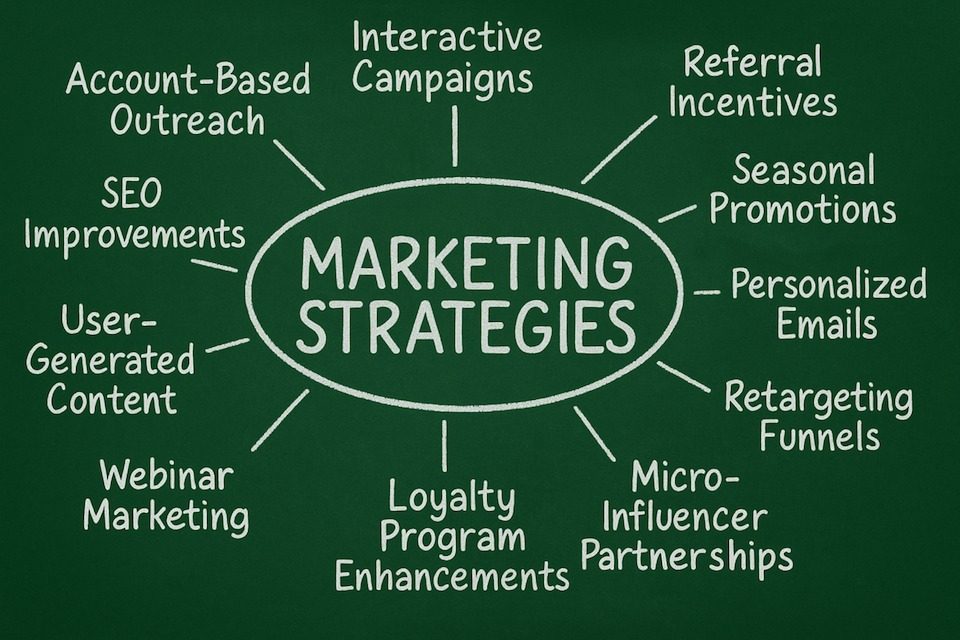
Effective Marketing Strategy for Real Results
Marketing, Strategy
How to Create a Marketing Strategy That Actually Drives Results
A marketing strategy that works is more than a list of tactics. It’s a clear, focused plan that connects the right message with the right people at the right time. Here’s how to build one that doesn’t just look good in a slide deck, but actually moves the numbers that matter.
Start With Clear, Measurable Business Goals
A results-driven marketing strategy begins with the business, not with channels or creative ideas. Before you write a single social post, decide what success actually looks like. Do you want to increase qualified leads by 25%, grow online sales by 15%, or shorten the sales cycle by two weeks?
Tie each goal to a specific metric, a time frame, and a baseline. That way, you can judge every marketing decision by a simple question: Will this help us hit that target? If the answer is unclear, the tactic probably doesn’t belong in your strategy.
Know Your Audience Better Than Your Competitors Do
Campaigns fail less often because of bad creative and more often because they’re aimed at the wrong people with the wrong message. To avoid that, build simple, focused customer profiles based on real data: website analytics, CRM insights, customer interviews, and sales feedback.
For each key segment, define their goals, frustrations, decision triggers, and buying journey. A strategy that actually drives results speaks directly to these realities instead of relying on vague “target everyone” messaging that resonates with no one in particular.
Craft a Sharp Value Proposition and Core Message
Once you know who you’re talking to, clarify what you will say. Your value proposition should answer three questions in a sentence or two: Who is this for? What problem do you solve? Why is your solution better or different from alternatives?
From there, develop a small set of core messages that can be adapted across channels without losing their essence. Consistency is key: repetition of a clear promise builds recognition and trust, while constantly changing your message only creates confusion and weakens results.
Choose Channels Based on Where Results Actually Happen
It’s tempting to be everywhere at once, but a strategy that drives results is selective. Map your audience’s buying journey and identify the touchpoints that truly influence decisions: search, email, events, referrals, social platforms, or partner channels. Then prioritize the few that align with your goals and budget.
Think in terms of a simple funnel: channels that create awareness, channels that nurture interest, and channels that convert. Assign each tactic a specific role in that journey, so you’re not expecting one channel to do everything at once.

Clear funnel roles for each channel prevent scattered efforts and wasted budget.
Turn Strategy Into an Actionable Plan and Calendar
A strong strategy is useless if it never leaves the slide deck. Translate your decisions into a clear plan: what campaigns you’ll run, when they’ll launch, who owns each step, and what resources are required. Build a simple calendar that shows major initiatives, key dates, and dependencies across teams.
Include checkpoints for creative development, approvals, and tracking setup. When everyone understands the sequence and their responsibilities, execution becomes smoother—and the strategy has a real chance to deliver the outcomes you designed it for.
Measure Relentlessly and Adjust With Intent
The difference between a plan and a strategy that actually drives results is iteration. Define a small set of key performance indicators that connect directly to your goals—such as cost per lead, conversion rate, pipeline value, or customer lifetime value—and review them regularly.
Look for patterns before you react. If a channel is underperforming, ask whether it’s a targeting issue, a message mismatch, or a landing page problem. Make focused adjustments, test one change at a time, and keep what works. Over time, this cycle of measurement and refinement is what turns a good strategy into a reliably high-performing one.
Bringing It All Together
A marketing strategy that truly drives results is built on clear goals, deep audience insight, a sharp message, focused channels, disciplined planning, and ongoing optimization. When these elements work together, your marketing stops feeling like guesswork and starts functioning as a predictable growth engine for your business.